Keynotes: What You’ll Learn
- The best books to add to your law-school reading list in 2026
- Which books are best for first-year and beginner law students
- Books that can improve legal reasoning and analysis
- Books that can improve legal writing
- Books useful for aspiring lawyers and pre-law students
- How to choose books according to your level
- How to read law books more effectively
- Why you shouldn’t rely on books alone for current law
Introduction
Starting or continuing law school in 2026 means dealing with an enormous amount of information.
Cases. Statutes. Textbooks. Articles. Legal opinions. Assignments. Examinations. Research. And, of course, the endless reading.
But here’s something many students discover only after spending months in law school:
Reading more does not automatically mean learning more.
The quality of what you read and how you read it matters.
The right books can help you understand legal reasoning, improve your writing, develop stronger analytical skills and become more confident when dealing with difficult legal concepts.
That’s why this guide focuses on books that do more than simply provide legal information.
Some are designed specifically for law students. Others focus on legal reasoning, writing, advocacy or the wider meaning of law.
And importantly, because legal systems differ, this list focuses largely on skills and foundational thinking rather than pretending that one textbook can teach the substantive law of every jurisdiction.
So, if you’re looking for the best law book to begin your legal reading journey or you’re simply trying to decide which books deserve a place on your shelf keep reading.
1.Thinking Like a Lawyer — Frederick Schauer
If there is one skill every law student needs to develop, it is the ability to think legally.
Thinking Like a Lawyer: A New Introduction to Legal Reasoning by Frederick Schauer is an excellent place to start.
The book is specifically aimed at law students and explores subjects including rules, precedent, authority, analogical reasoning, statutory interpretation, judicial opinions, legal facts and burdens of proof.
Why law students should read it
Law school isn’t simply about asking:
“What is the rule?”
You also have to ask:
“How does the rule apply?”
And:
“What happens when the facts are different?”
This book helps introduce students to the reasoning processes behind legal decision-making.
Best for:
- First-year law students
- Students struggling with legal reasoning
- Pre-law students
- Students interested in jurisprudence
- Anyone who wants to understand how lawyers approach problems
Key takeaway: Don’t just memorise legal rules. Learn how to reason with them.
2. Legal Writing in Plain English — Bryan A. Garner
A lawyer who knows the law but cannot communicate it effectively will struggle professionally. That’s why legal writing deserves a place on every law student’s reading list.
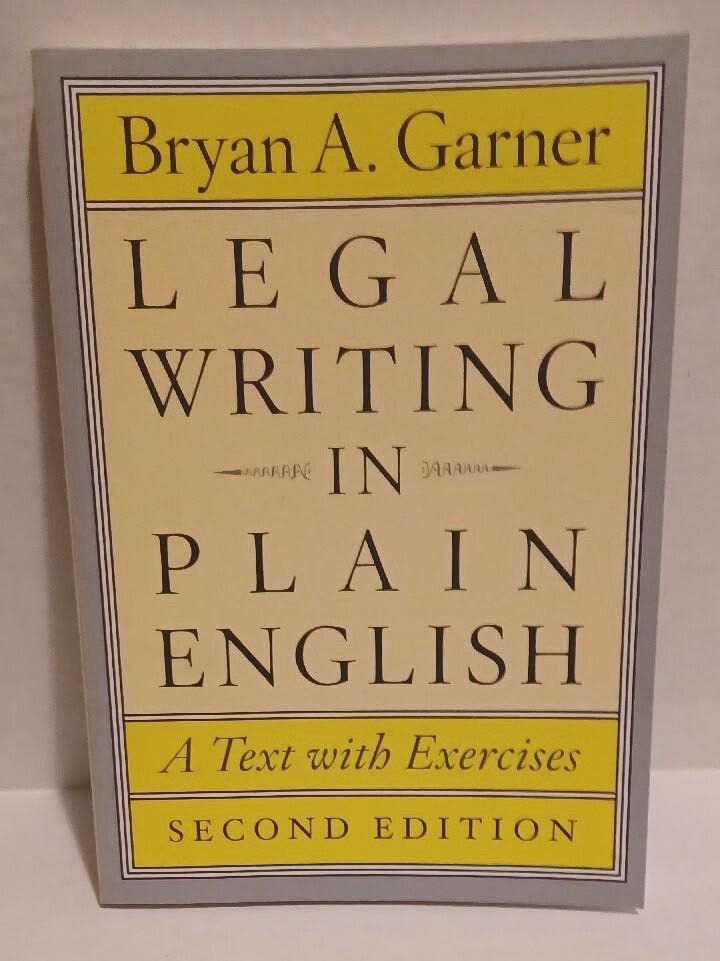
Bryan A. Garner’s Legal Writing in Plain English is one of the most useful books for students who want to make their writing clearer, more direct and easier to understand.Harvard Law School’s writing resources list the third edition, published in 2023, among its recommended books on legal writing.
Why read it?
It can help you improve:
- Sentence structure
- Clarity
- Conciseness
- Organisation
- Professional writing
- Elimination of unnecessary legal jargon
This is particularly useful when writing essays, opinions, memoranda, research papers and other legal work.
Best for:
Every law student.
If you’re looking for a practical best law book for improving your communication skills, this is a strong choice.
3. Getting to Maybe — Richard Michael Fischl & Jeremy Paul
Law-school examinations often require something different from simply remembering information.
You may know the law but still struggle to identify the issues hidden inside a hypothetical problem.
Getting to Maybe is widely known as a law-school exam strategy book and has long appeared on recommended legal-skills reading lists. The University of Houston Law Center, for example, includes it among recommended readings for lawyering skills and strategies.
What can you learn from it?
The book can help students think about:
- Legal issues
- Ambiguity
- Competing arguments
- Exam questions
- Analytical reasoning
- Applying rules to complicated facts
Best for:
- Law students preparing for examinations
- First-year students
- Students who know the law but struggle with application
Keynote: A law-school exam isn’t simply testing whether you remember the rule. It often tests whether you can identify and analyse the legal problems presented by the facts.
4. The Winning Brief — Bryan A. Garner
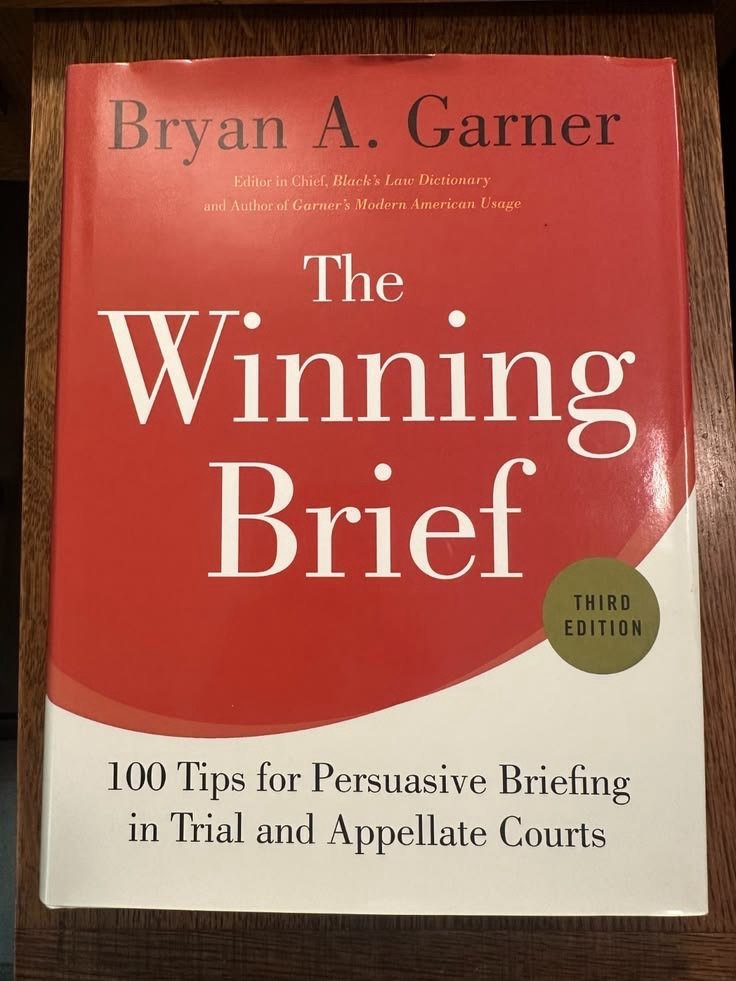
If you’re interested in advocacy, persuasive writing or litigation, The Winning Brief is another valuable addition. Harvard Law School lists the third edition among its recommended resources for professional legal writing.
The focus is on persuasive briefing and communicating legal arguments effectively.
Why it matters
As a law student, you may eventually need to write:
- Legal arguments
- Memoranda
- Submissions
- Briefs
- Opinions
- Research papers
Learning how to present an argument clearly is therefore an important professional skill.
Best for:
- Litigation students
- Aspiring advocates
- Students interested in persuasive writing
- Moot court participants
5. The Rule of Law — Tom Bingham
Not every book on your reading list needs to teach you how to pass an examination.Some books should help you understand why law matters.
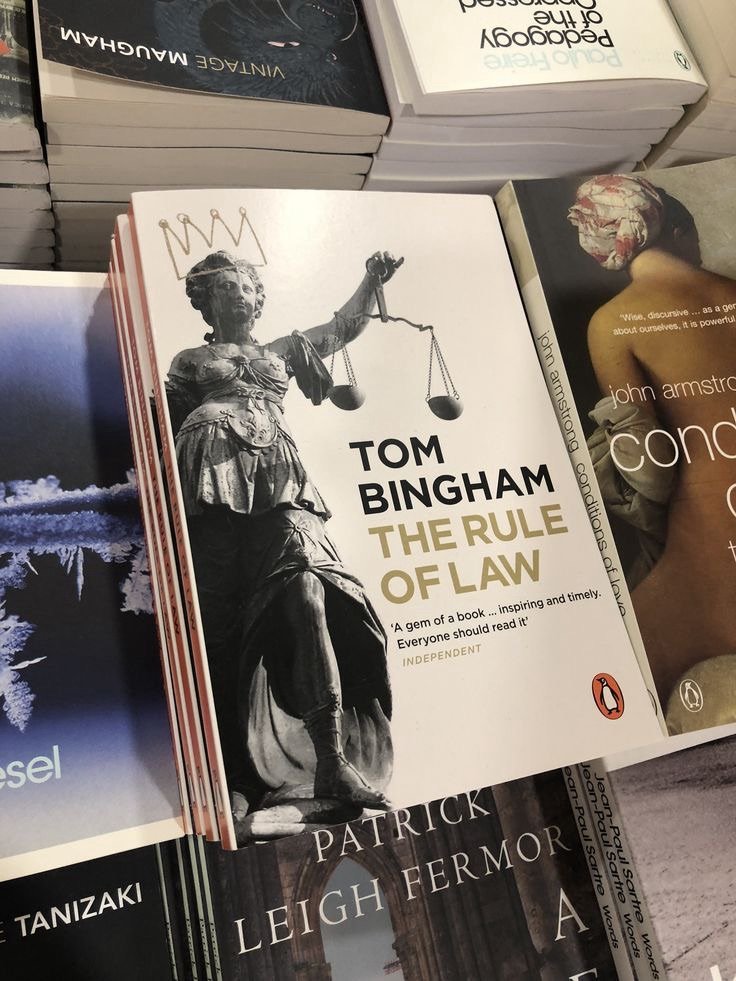
Tom Bingham’s The Rule of Law is useful for students interested in the foundations and principles of the rule of law.
It can encourage you to think beyond individual cases and consider broader questions about:
- Justice
- Government
- Legal institutions
- Rights
- Accountability
- The relationship between law and society
Best for:
Students who want to develop a broader understanding of the legal system rather than focusing exclusively on examination preparation.
6. Just Mercy — Bryan Stevenson
Law is ultimately about people. Just Mercy provides a powerful perspective on criminal justice and the human consequences of legal decisions.
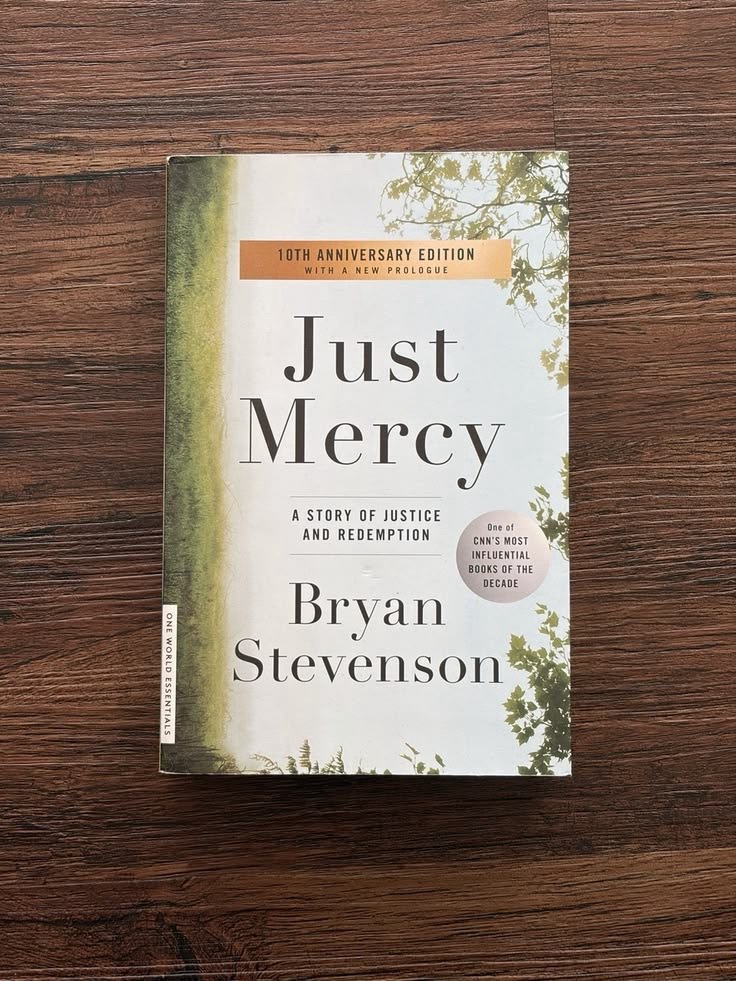
For a law student, reading books like this can provide a useful reminder that legal principles aren’t merely abstract concepts in textbooks.
They can affect:
- Families
- Communities
- Freedom
- Livelihoods
- Human dignity
- People’s futures
Why include it on a law reading list?
Because becoming a good lawyer involves more than knowing legal rules.
You also need to understand the human problems behind legal disputes.
7. Letters to a Law Student — Nicholas McBride
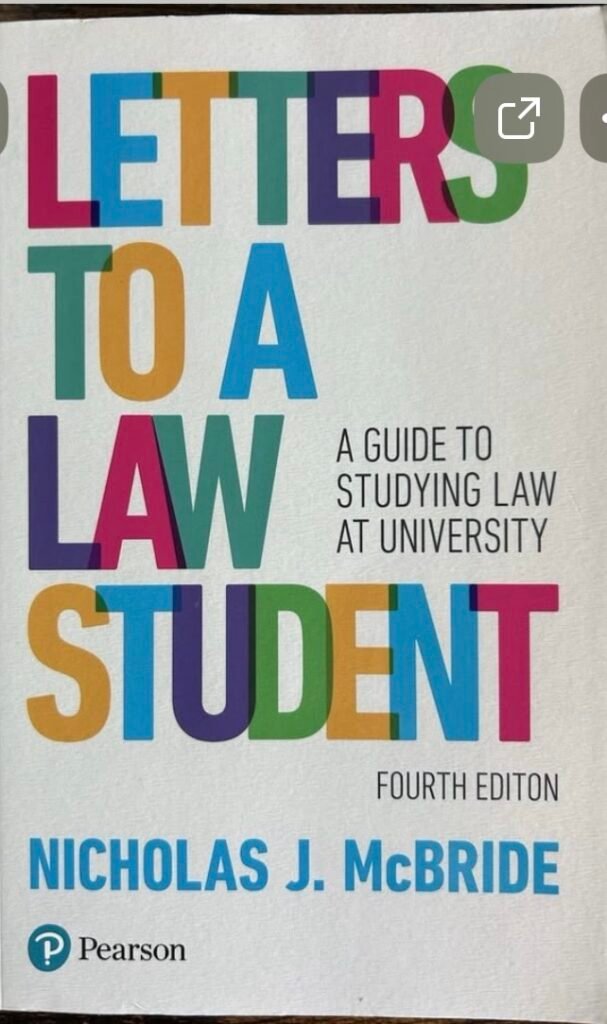
Starting law school can be confusing.
You may suddenly find yourself asking:
- How should I study?
- How should I read cases?
- How much should I read?
- How do I prepare for examinations?
- What should I expect from legal education?
A book aimed specifically at law students can help make that transition less intimidating.
Letters to a Law Student is particularly suitable for students who are beginning their legal education or preparing for law school.
Best for:
- Prospective law students
- First-year students
- Students adjusting to law school
8. Making Your Case — Antonin Scalia & Bryan A. Garner
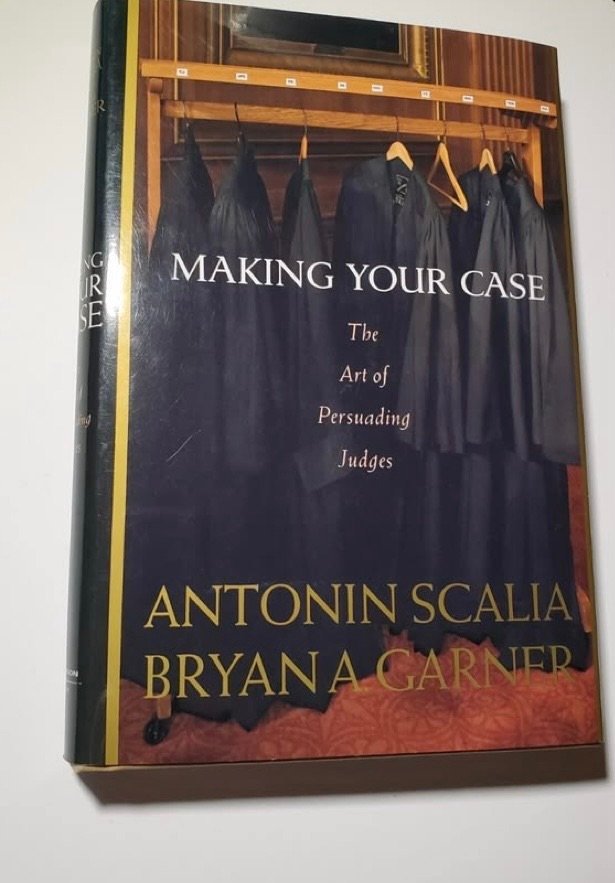
Students interested in advocacy should consider Making Your Case: The Art of Persuading Judges. Harvard Law School includes the book among its recommended professional legal-writing resources.
The central attraction is its focus on persuasion.
This makes it particularly useful for students interested in:
- Advocacy
- Litigation
- Moot court
- Appellate practice
- Legal argument
It can also help you understand an important distinction:
A legal argument isn’t simply a collection of legal authorities.
You need to use those authorities effectively to persuade your intended audience.
9. Just Writing — Anne Enquist & Laurel Currie Oates
Another useful resource for developing legal writing skills is Just Writing.
The University of Chicago’s D’Angelo Law Library lists the sixth edition among its legal-writing study aids.
It focuses on grammar, punctuation and style for legal writers.
Why this matters
Small writing problems can make a strong legal argument difficult to follow.
Developing good writing habits early can therefore benefit you throughout law school and into practice.
10. Legal Reasoning and Legal Writing — Richard K. Neumann Jr., Ellie Margolis & Kathryn M. Stanchi
Legal reasoning and writing go hand in hand.
You need to be able to understand a legal problem before you can communicate your analysis effectively.
Harvard Law School lists this work among its resources on legal reasoning.
Particularly useful for:
- New law students
- Legal research and writing courses
- Students learning legal analysis
- Students who struggle to structure arguments
Think of it as a bridge between understanding the law and explaining the law.
11. The Study of Law — Dennis J. Currier
Students sometimes focus entirely on substantive subjects and forget to develop their approach to studying.
Books about studying law can help you understand that legal education requires a different approach from ordinary reading.
A 2026 first-year law-school booklist, for example, includes The Study of Law among texts for critical-thinking instruction.
What makes a study-skills book useful?
Look for material that helps you with:
- Active reading
- Note-taking
- Case analysis
- Exam preparation
- Critical thinking
- Organisation
12. Plain English for Lawyers — Richard C. Wydick & Amy E. Sloan
Another excellent option for legal writing is Plain English for Lawyers.
Harvard Law School lists the sixth edition, published in 2019, among its general legal-writing resources.
The underlying principle is simple:
Legal writing should communicate, not confuse.
If your writing can be made clearer without sacrificing legal accuracy, clarity is usually the better choice.
13. An Introduction to Legal Reasoning — Edward H. Levi
For students interested in legal reasoning at a deeper level, Edward H. Levi’s classic work is worth exploring.
Harvard Law School’s legal-writing resources include it among works on legal reasoning.
This is better suited to students who want to think more deeply about how legal reasoning operates rather than simply looking for an examination guide.
14. A Good Legal Dictionary
Sometimes the most useful book on your shelf isn’t a 700-page textbook. It may be a legal dictionary. Law students encounter unfamiliar terminology constantly.
A legal dictionary can help you understand:
- Legal terminology
- Latin expressions
- Procedural concepts
- Technical definitions
- Common legal phrases
But remember: a dictionary definition is not always a substitute for understanding a legal principle in its proper context.
Use it as a starting point, then consult the relevant authority.
15. Your Prescribed Textbooks
This may sound obvious, but it is one of the most important points in this article.
If your university or law school prescribes particular textbooks, don’t ignore them simply because another book is more popular online.
Your required materials should generally form the foundation of your studies.
Supplementary books are there to help you understand difficult concepts, improve skills and gain additional perspectives.
A supplementary best law book should support your curriculum—not replace your prescribed materials.
How to Read Law Books Without Getting Overwhelmed
Buying books is easy.
Actually reading them is the difficult part.
Try this method.
1. Preview the chapter
Read the title, headings and introduction before starting.
2. Identify the main concept
Ask: What am I supposed to understand after reading this?
3. Take short notes
Don’t rewrite the entire textbook. Write the key principle in your own words.
4. Connect cases to principles
When reading a case, identify:
- Facts
- Issue
- Decision
- Reasoning
- Legal principle
5. Close the book and recall
Ask yourself:
“What did I just learn?”
If you cannot explain it without looking at the page, go back and review it.
6. Apply the principle
Create a hypothetical situation and ask how the legal rule would operate.
This final step is particularly important.
Do You Need to Read All These Books?
No.
Please don’t turn this list into another source of pressure.
You don’t need to read 15 books before becoming a good law student.
Start with two or three.
For example:
If you’re a beginner:
Start with:
- Thinking Like a Lawyer
- Letters to a Law Student
- A good introductory legal textbook for your jurisdiction
If you want better writing:
Start with:
- Legal Writing in Plain English
- Plain English for Lawyers
- The Winning Brief
If you’re preparing for examinations:
Start with:
- Getting to Maybe
- Your prescribed textbooks
- Your lecturer’s materials and past examination questions
Important: Check Your Jurisdiction
This is especially important for international readers.
A book about legal reasoning or writing may be useful across jurisdictions, but a textbook explaining substantive law may be specific to a particular country.
For example, a book dealing with American constitutional law isn’t automatically suitable for a student studying Nigerian, English, Canadian or Australian law.
Therefore, before buying a substantive law textbook, check:
Which jurisdiction does this book cover?
Also check the edition and publication date.
Law changes.
A textbook that was excellent several years ago may contain outdated legislation or case law.
Your current statutes, regulations, court decisions and prescribed materials should take priority when researching the law.
The best books for law students in 2026 aren’t necessarily the newest books on the market.
They are the books that help you develop the skills you actually need: reasoning, research, writing, analysis, communication and professional judgment.
Your prescribed textbooks will give you the foundation of your subjects. Supplementary books can then help you understand those subjects from different perspectives and develop skills that aren’t always acquired through memorisation alone.
If you’re just beginning, don’t overwhelm yourself by buying everything on this list.
Choose one book on legal reasoning, one on legal writing and one resource relevant to your current area of study.
Then read them properly.
The goal isn’t to become the student with the biggest bookshelf.
The goal is to become the student who can open a legal problem, identify the issues, find the relevant law, analyse it and explain the answer clearly.
And if you’re searching for the best law book for your particular stage of legal education, start by identifying the skill you want to improve. Once you know that, choosing the right book becomes much easier.
Yours truly Rachel Esquire.