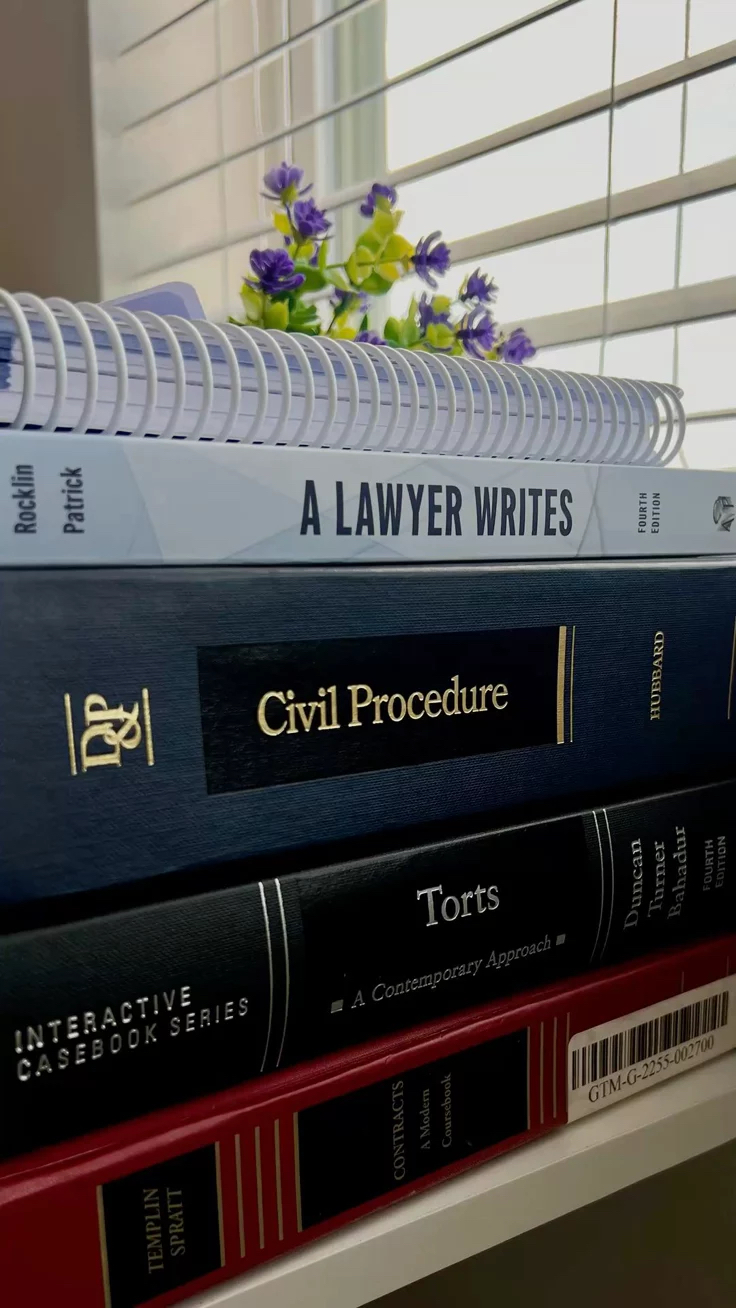
Law school is one of the most expensive educational investments a student can make. With tuition averaging over $46,000 per year and total costs exceeding $217,000, every dollar saved matters. Yet many students overlook one of the most controllable expenses in their budget: textbooks. The good news is that affordable law books are more accessible than ever, thanks to open-source publishing, used book marketplaces, and rental services.
This article explores how savvy law students can build a comprehensive legal library without sacrificing quality or financial stability.
The Hidden Burden of Law School Textbooks
For most incoming law students, the cost of textbooks comes as an unwelcome surprise. A single casebook from a major publisher can cost $200 to $300, and a typical 1L semester requires four to six casebooks plus supplements. Over three years, textbook expenses can easily exceed $3,000 to $5,000. When combined with tuition, housing, and living expenses, these costs add significant weight to already burdensome student loans.
The traditional publishing model has long dominated legal education, with students feeling pressured to buy the newest editions directly from campus bookstores. However, this model is rapidly changing. A growing movement of law professors, legal scholars, and educational institutions has embraced open-access publishing, creating high-quality affordable law books that rival their commercial counterparts. Students who know where to look can now access the same knowledge for a fraction of the cost or even for free.
The Open-Source Revolution: Free Casebooks for the Modern Student
Perhaps the most exciting development in legal education is the rise of open-source casebooks. These are not amateur efforts; they are peer-reviewed, professionally edited textbooks written by leading scholars at institutions like Harvard, MIT, and Yale. The MIT Press and Harvard Law School Library have partnered to publish a series of open casebooks that are freely available to students worldwide. Similarly, the CALI eLangdell Bookstore offers free digital casebooks covering virtually every 1L subject, from civil procedure to constitutional law.
For students who prefer physical copies, platforms like Semaphore Press offer digital casebooks at a suggested price of just $30 less than one-sixth the cost of a traditional casebook. The H2O platform, developed by Harvard Law School, allows professors to create and share customized casebooks at no cost. These resources represent a fundamental shift in how legal knowledge is distributed, making affordable law books not just a possibility but a practical reality for every student.
Consider the savings: a student taking the standard 1L curriculum could complete their entire first year using only free or low-cost open-source casebooks. Subjects like contracts, torts, criminal law, property, and civil procedure all have excellent free alternatives. When a student can access a constitutional law casebook by Lawrence Lessig or a civil procedure text by I. Glenn Cohen at no cost, the argument for paying $250 for a commercial equivalent becomes difficult to justify.
Beyond open-source options, the secondary market for legal textbooks offers another rich source of affordable law books. Websites like AbeBooks, Amazon Marketplace, and BarristerBooks specialize in connecting buyers with used law books at deep discounts. A casebook that retails for $250 new can often be found for $50 to $80 in good used condition. Older editions, which are frequently 95% identical to the newest release, sell for even less.
The key to success in the used book market is timing and flexibility. Students who shop early before the semester rush have the best selection and prices. Those willing to use a previous edition can save 60% to 70% off the cover price. While some professors insist on the current edition, many accept or even prefer older versions, particularly for foundational subjects where the core principles have not changed. It is always worth asking before assuming a new edition is mandatory.
CampusBooks.com serves as an excellent price comparison tool, aggregating listings from dozens of sellers to help students find the absolute lowest price on any given title. For a student willing to spend an hour researching, the savings can be substantial. One student might pay $300 for a new contracts casebook, while another finds the same title used for $45. That difference, multiplied across six or seven books per semester, becomes the difference between manageable expenses and overwhelming debt.
Rental Services: Pay for What You Need, When You Need It
For books that a student knows they will not keep after a single semester, rental services offer an elegant solution. Companies like CampusBookRentals and BooksRun allow students to rent textbooks for 125-day periods perfect for a standard semester with free return shipping. Rental prices are typically 60% to 80% lower than purchase prices, making them ideal for casebooks that become obsolete once the final exam is completed.
Renting also eliminates the risk of a book losing resale value. Traditional casebooks depreciate rapidly, especially when a new edition is released. A student who buys a $200 book might struggle to sell it back for $50 a year later. By renting, that student pays $40 upfront and walks away with no further obligation. For affordable law books, rental services represent one of the most cost-effective strategies available.
Essential Prep Books on a Budget
Before classes even begin, many students invest in preparatory books designed to ease the transition into legal education. Titles like Getting to Maybe, 1L of a Ride, and Law School Confidential are universally recommended by professors and upperclassmen. Fortunately, these books are also excellent candidates for affordable law books shopping.
Used copies of Getting to Maybe, widely considered the definitive guide to law school exams, can be found for $15 to $25. 1L of a Ride, a professor’s practical roadmap to the first year, sells for around $12 used. Law School Confidential, a comprehensive 432-page guide written by a recent graduate, costs $10 to $15 in older editions. Even Plain English for Lawyers, the gold standard for legal writing clarity, is available for under $20 used. A student can assemble a complete pre-law library for under $100, less than the cost of a single new casebook.
These preparatory texts are particularly well-suited to the used market because their core advice remains relevant across editions. The strategies for briefing cases, outlining, and writing exam answers do not change dramatically from year to year. A 2015 edition of Getting to Maybe teaches the same analytical framework as the 2024 edition, making it a perfect candidate for budget-conscious shopping.

Reference Books That Pay for Themselves
Every law student needs a few reference books that will serve them throughout their careers. The Bluebook: A Uniform System of Citation is the most obvious example, as proper citation is required in legal writing, law review, and practice. While the 22nd edition is current, the 21st edition is still widely accepted and costs roughly half the price used. Many law libraries also keep copies on reserve, allowing students to consult the Bluebook occasionally without owning it.
Plain English for Lawyers by Richard Wydick and Amy Sloan is another essential reference that delivers exceptional value. At under $20 used, it teaches the clarity and concision that distinguish good legal writing from bad. The Elements of Style by Strunk and White, available for under $10, belongs on every lawyer’s shelf regardless of specialty. These small investments in affordable law books yield returns that last an entire career.
Practical Strategies for Maximizing Savings
Building a library of affordable law books requires more than just knowing where to shop; it requires a strategic approach. First, students should always check whether their professor accepts previous editions before buying the newest release. Second, splitting the cost of expensive supplements with a study group can reduce individual expenses by 75%. Third, selling books back immediately after finals when the buyback market is most competitive can recoup 30% to 50% of the original purchase price.
Students should also take advantage of their law libraries, which often keep current casebooks on reserve. For students who are disciplined about planning their reading schedule, this can eliminate the need to purchase certain books entirely. Additionally, some professors receive free review copies from publishers and may place them on reserve or allow students to borrow them. It never hurts to ask.
Finally, students should consider the long-term value of each purchase. A casebook for a required 1L course may be worth buying used if it will serve as a reference throughout law school. Conversely, a supplemental text for a single elective is better rented or borrowed. Thinking critically about each acquisition prevents unnecessary spending and keeps the focus on what truly matters: learning the law.
Conclusion: Knowledge Without the Premium Price
The landscape of legal education is changing, and students no longer need to accept exorbitant textbook costs as an unavoidable part of law school. Open-source casebooks, used book marketplaces, rental services, and strategic purchasing have made affordable law books a realistic option for every student, regardless of financial background. A student who shops wisely can complete their entire 1L curriculum for under $150 in textbooks a fraction of what many peers will spend.
The quality of a legal education is not measured by the price tag on a casebook. It is measured by the effort, engagement, and intellectual curiosity a student brings to their studies. The resources available today ensure that cost is no longer a barrier to accessing the knowledge needed to succeed. By embracing affordable law books, students can invest their savings where it matters most: in their future.