

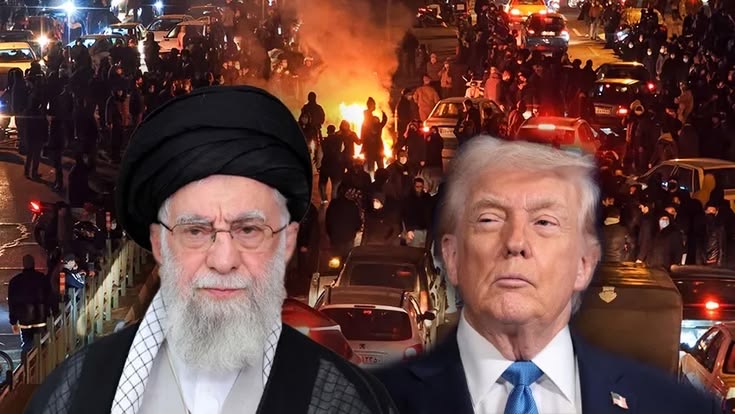
In early 2026, the Middle East witnessed a sudden and dramatic escalation of violence that has been widely defined as a war involving Iran. Although conflicts in the region are not new, what happened in late February and early March 2026 marked a significant turning point due to its scale, intensity, and the involvement of multiple major powers.
Preceding Tensions: A Long History of Hostility
Before 2026, relations between Iran and Israel supported by the United States had long been fraught. Disputes over Iran’s nuclear program, ballistic missiles, and support for armed groups across the region simmered for decades. A brief conflict in June 2025 had already demonstrated how easily tensions could erupt into open fighting.
Despite intermittent talks and attempted diplomacy in early 2026, dialogue failed to produce a breakthrough, fueling suspicion and strategic calculations on all sides.
February 28, 2026: The Atrocity That Changed Everything
Then on February 28, 2026, the United States and Israel launched coordinated military strikes against Iran, beginning what many news outlets and analysts describe as a war.
Under the operation names “Operation Epic Fury” (U.S.) and “Operation Roaring Lion” (Israel), hundreds of fighter jets, cruise missiles, and long-range weapons struck major Iranian cities including Tehran and other strategic sites.
The initial targets included:
- military and nuclear-related infrastructure,
- command and control centers,
- and Iran’s supreme leadership.
The attacks reportedly killed Iran’s Supreme Leader, Ayatollah Ali Khamenei, along with other high-ranking officials — a development confirmed by multiple international sources and widely reported in global media.
Why This Is Considered the Start of the War
Because Iran was struck first by foreign military forces, most independent reporting identifies the United States and Israel as the parties that initiated active conflict in 2026. Their combined offensive was not limited to a small raid or isolated incident — it was a broad military campaign designed to degrade Iran’s military infrastructure and leadership.
In the hours immediately following those attacks, Iran launched extensive counter-strikes, firing ballistic missiles and drones at Israeli territory and U.S. military bases across the Gulf. Neighboring states hosting U.S. forces also experienced attacks and air defense engagements.
This transition from a pre-existing state of hostility into a full-blown war-level exchange — with high casualty tolls and widespread military operations on both sides — is precisely why media organizations now refer to the situation as war with Iran in 2026.
Iran’s Response and Regional Escalation
Once military operations began against Iran, the conflict quickly expanded beyond those initial strikes. Iran’s retaliatory attacks targeted not just Israel but also U.S. assets across several Middle Eastern countries, drawing in allied factions such as Hezbollah.
These dynamics underlined that the war was no longer limited to Iranian territory — it was spreading across the region and affecting countries far beyond Iran’s borders.
In Summary: Who Started It?
- The first major military action in the 2026 conflict was carried out by Israel and the United States against Iran.
- Iran’s response came after these strikes hit its cities, military installations, and leadership, triggering widespread retaliation.
Because of this sequence of events, global reporting overwhelmingly identifies the U.S. and Israel’s offensive on February 28, 2026
aimed at Tehran and key Iranian figures as the act that started the war involving Iran.











Leave a Reply