

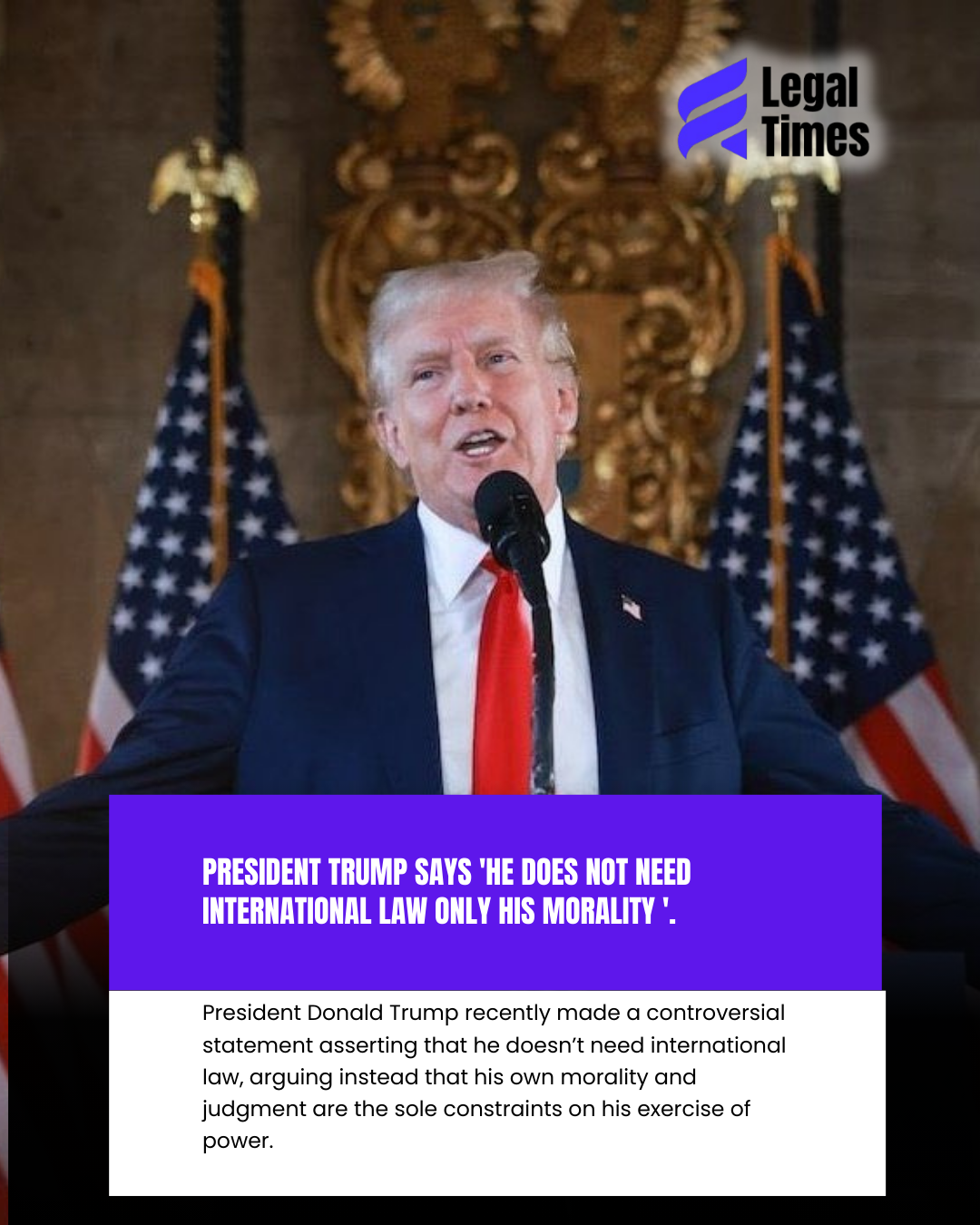
President Donald Trump recently made a controversial statement asserting that he doesn’t need international law, arguing instead that his own morality and judgment are the sole constraints on his exercise of power. This remark not only sparked political debate but also raised broader concerns about the future of U.S. foreign policy, international relations, and global governance.
A Radical Challenge to Global Legal Norms
To begin with, international law forms the legal foundation through which nation-states interact, resolve disputes, and regulate the use of military force. Frameworks such as the UN Charter, Geneva Conventions, and various treaties aim to prevent unilateral intervention and safeguard human rights.
However, Trump’s insistence that international norms are optional challenges these long-standing principles. It also introduces uncertainty into the global system, particularly as major powers often set the tone for geopolitical behavior.
Moreover, Trump’s remarks follow a series of bold foreign policy actions that already tested legal and diplomatic boundaries. For instance, U.S. forces intervened in Venezuela, capturing former President Nicolás Maduro and bringing him to face charges in the United States. Likewise, Trump has repeatedly threatened to target drug cartels in Mexico and Colombia, while simultaneously expressing renewed interest in controlling Greenland’s strategic resources.
Because these actions touch on core issues of sovereignty, extraterritorial jurisdiction, and military intervention, international law experts argue that Trump is reshaping the geopolitical landscape in real time. Consequently, allies and adversaries alike must now evaluate how far the United States is willing to go without multilateral approval.
From Legal Accountability to Personal Morality
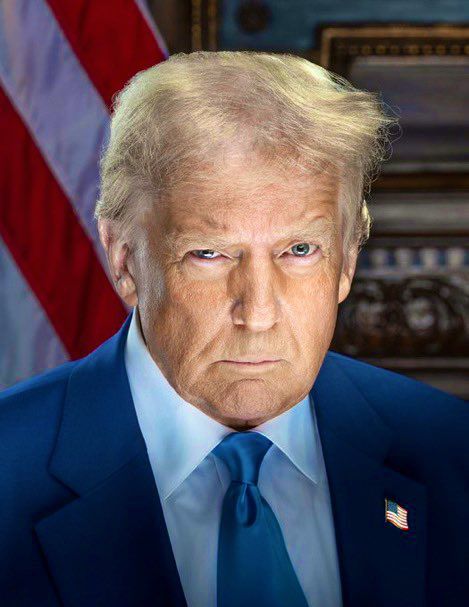
Moving from policy to philosophy, Trump defended his stance by emphasizing personal morality. According to him, it is his conscience—not treaties or legal institutions—that ensures restraint. Although this explanation appears straightforward, it carries profound implications.
On one hand, supporters interpret this as a declaration of American exceptionalism and decisive leadership free from bureaucratic constraints. On the other hand, critics warn that replacing global rules with individual discretion risks authoritarian decision-making and undermines the liberal international order that has governed world politics since World War.
Furthermore, Trump’s comments generated swift reaction from global leaders, diplomats, and legal scholars. European allies expressed concern that discarding international law could trigger a return to raw power politics, where “might makes right.” Meanwhile, U.S. lawmakers debated whether Congress should assert more control over military authorization, signaling anxiety about executive overreach.
Given that the United States has traditionally championed international law to legitimize global governance, this shift represents a significant strategic pivot.
Potential Long-Term Implications for Global Politics.
If Trump’s approach becomes doctrine rather than rhetoric, several consequences could reshape international affairs:
1. Erosion of Multilateral Institutions
Without U.S. participation, organizations like the United Nations, NATO, and the International Criminal Court could lose relevance and influence.
2. Rise of Unilateralism
More states may adopt aggressive foreign policy strategies based solely on national interest rather than international consensus.
3. Decline of Predictability in International Relations. Increased unpredictability often translates into higher risk of conflict, military escalation, or territorial disputes.
Therefore, Trump’s remarks should not be viewed as mere political provocation; they may signal a transformational shift in global power dynamics.




Leave a Reply